
What is Contrast Enhanced Mammography?
If your doctor has recommended a contrast enhanced mammogram, it is natural to have questions about why this test is different from a standard mammogram and what your appointment will involve. This guide walks through what contrast enhanced mammography is, why your doctor might refer you for one, and what to expect on the day at North Coast Radiology.
Contrast enhanced mammography (CEM) is a specialised mammogram that uses an iodine-based contrast dye alongside standard 2D and 3D (tomosynthesis) mammogram x-rays. The dye highlights areas of increased blood flow in breast tissue, which can occur where a cancer is growing. CEM is performed at the same appointment as a standard mammogram, with only a small increase in radiation dose.
During a CEM exam, contrast dye containing iodine, the same type of dye used in some CT scans, is given through a small intravenous (IV) line in your arm. The dye makes it easier for our radiologists to see new blood vessels that can form when cancer grows. A mammogram uses low-dose x-ray to examine breast tissue; CEM builds on this with the added contrast step. CEM exams provide additional information about the extent of newly diagnosed breast cancers, and can offer improved reporting confidence to allow for effective treatment planning.
Frequently Asked Questions
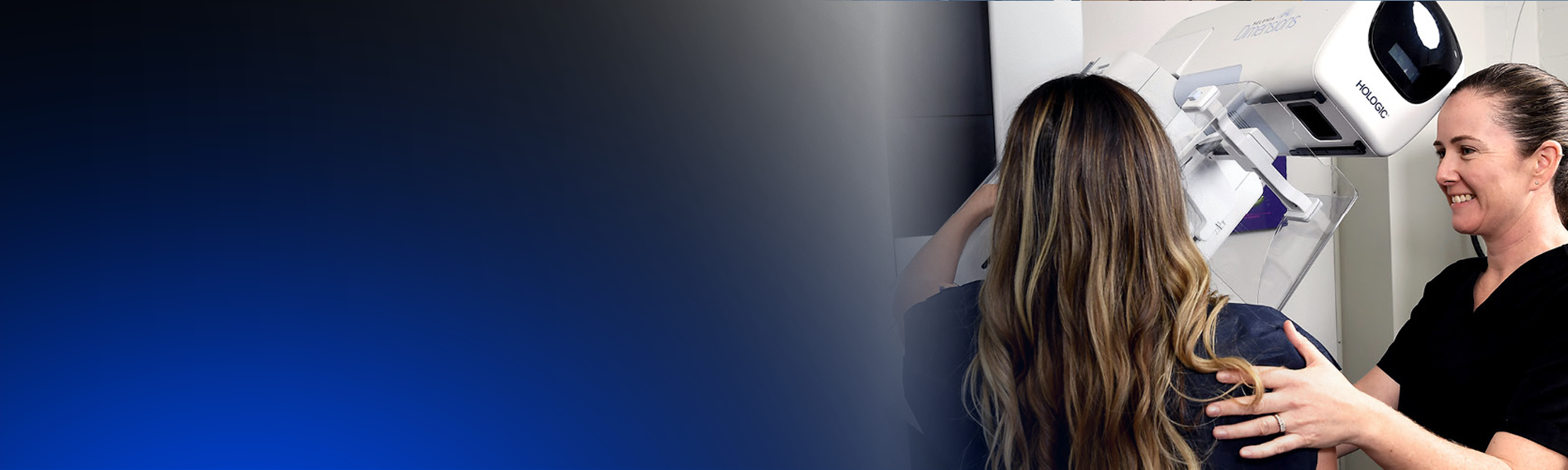
A CEM appointment is very similar to a standard mammogram. Before your images are taken, a member of our team will insert a small IV line into your arm and give you the contrast dye while you are seated. Your radiographer will then perform your mammogram in the usual way. No extra breast compression is needed beyond what is used for a standard mammogram.
- You will change into a gown and remove clothing from the waist up.
- A nurse or radiographer will insert a small IV line into your arm.
- The contrast dye is injected while you are seated. You may feel a brief warm sensation. This is normal.
- Your radiographer will position you for your mammogram images, in the same way as a standard mammogram.
- Images are taken of both breasts, generally in the same positions used for a standard mammogram.
- Your IV line is removed and a small bandage placed over the site once your appointment is finished.
If you have diabetes, take metformin, or have kidney disease, you will need a blood test called an eGFR (a test of kidney function) within the 12 months before your CEM. Avoid deodorant, lotion, powder, or perfume on the day, and bring your referral, Medicare card, and any previous breast imaging.
On the day of your appointment, you can eat a light meal such as a sandwich or soup. Some patients feel mild nausea from the contrast, so it may help to avoid a heavy meal beforehand. Please do not apply deodorant, lotion, cream, powder, talc, or perfume to your chest area before your appointment, as these can affect image quality.
Wear a two-piece outfit if possible, and remove necklaces and other jewellery beforehand. Bring your referral, Medicare card and/or concession card, and any previous mammogram or breast imaging for comparison. Please arrive around 15 minutes before your appointment time. If you have a child aged 6 or under, please arrange for them to be supervised by another adult, as they cannot be present in the examination room.
CEM involves a small increase in radiation dose compared with a standard mammogram, similar to one extra mammogram image being taken. Allergic reactions to the iodine contrast are rare. Your doctor will discuss any specific risks with you based on your health history.
As with any test involving contrast, there is a small chance of an allergic reaction to the iodine dye. Please tell our team before your appointment if you:
- Have had kidney disease or reduced kidney function
- Have previously had an allergic reaction to iodine-based contrast
- Are a diabetic taking metformin
CEM is not recommended during pregnancy. If you are breastfeeding or think you may be pregnant, please tell our team before your appointment. Your doctor has weighed the value of this additional information against the small risks involved in having contrast and a low dose of radiation.
There is no special recovery needed after a CEM appointment. Your IV line and bandage can be removed that evening, and you can return to your normal activities straight away. Drinking six to eight glasses of water over the next 24 hours helps clear the contrast from your body.
You may need further imaging or tests to follow up on your CEM results, such as a breast ultrasound, breast MRI, or a breast biopsy. This is a normal part of the imaging pathway and does not necessarily mean anything serious has been found. Your referring doctor will discuss any next steps with you once your report is available.
Our customer service team can advise you of all costs involved, including any out-of-pocket costs. Please contact your preferred clinic for a quote before your appointment.
We recommend arranging alternative childcare for the day of your scan or bringing another adult with you to care for your child.
Children are not allowed in the examination room, and there is no supervision available in the waiting area.
Our staff need to maintain full focus during your examination to ensure the best possible care.
Your doctor may recommend a CEM if you have dense breast tissue, a higher risk of breast cancer, an inconclusive mammogram or ultrasound result, or if breast MRI is not suitable for you. CEM can also be used to help identify suitable treatment planning.
Your doctor might request a CEM if you have or are experiencing:
- Dense breast tissue, where a standard mammogram can be harder to interpret
- A higher risk of breast cancer, for example due to a strong family history
- Findings on a mammogram or ultrasound that need a closer look
- A reason breast MRI is not suitable for you
- Planned or current neo-adjuvant chemotherapy
Your doctor will always be the one to decide whether CEM is the right next step for you, based on your individual circumstances.
CEM adds an iodine contrast injection to a standard mammogram, taking about 15 minutes longer overall. In some cases your doctor may recommend breast MRI instead of, or alongside, CEM. Your doctor will recommend whichever option, or combination of options, best suits your situation.
| Test | Uses Radiation? | Contrast Used? | Typical Duration |
| Standard mammogram | Yes (low dose) | No | 30-60 minutes |
| Contrast enhanced mammography (CEM) | Yes (low dose) | Yes | About 15 minutes longer than a standard mammogram |
After your appointment, your report and images are sent electronically to your referring practitioner. They are also available to you via the NCR Patient Results app and web portal, generally within 5 to 10 days of your appointment.
